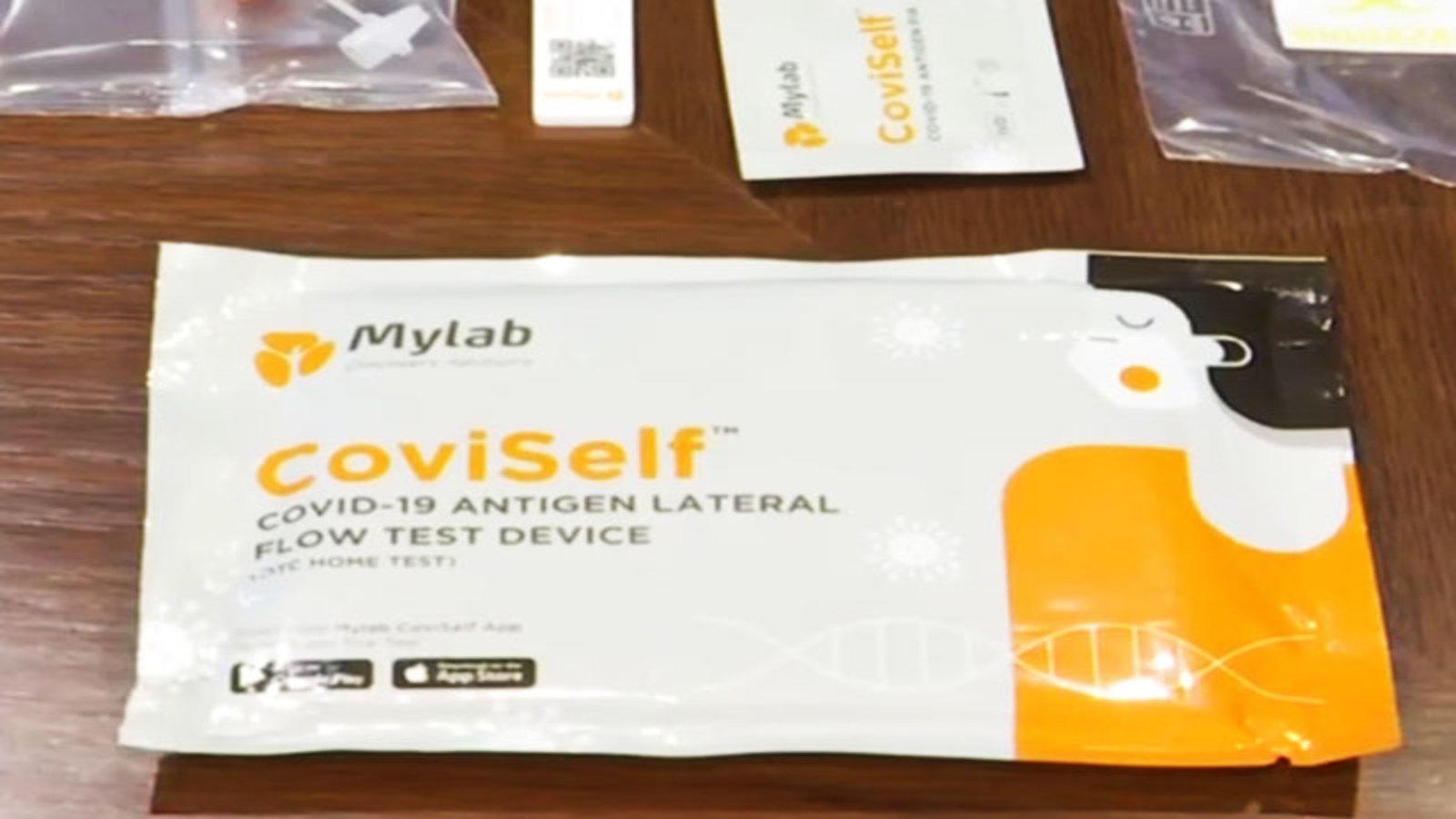
Covid 19 Self-Testing Kit by coviself, it is a COVID-19 rapid antigen testing kit developed by Mylab Discovery Solutions Ltd. in Pune which has been approved by the Indian Council of Medical Research.
According to the ICMR, the home test kit should only be used by those with symptoms and those who are close to those who have confirmed in the lab, and those who test positive must abide by the recommendations set forth by the ICMR and the ministry of health.
The Covid-19 Self-Testing Kit How to utilize It
One test card is included in the package, as well as an extraction tube that has been pre-filled with an antibacterial solution and there is an app called Mylabcoviself that must be downloaded on the mobile phone of the patient who is taking the test, which provides a detailed explanation of the procedure and a negatively or positively test result.
A Nose Swab Will Suffice for this quick Antigen Testing
- Two sections will appear on the test card wherein one will be devoted to control and the other for testing.
- If the bar appears only in the control section ‘C’, the result is negative but if it appears in both the control and test sections (T), the result is positive.
- There are two ways to get a positive test result: within 5 to 7 minutes and within 15 minutes at the most, according to HasmukhRawal, general director of Mylab Discovery Solutions.
- The test strip must be photographed using the same smart telephone that was used to download the app and register the user, and this is an important detail to keep in mind.
When Should You Consider Using Self-Testing?
If you exhibit symptoms of COVID-19 or if you have been exposed to or may have been exposed to somebody who has COVID-19, you should consider doing a self-test to determine your status.
In spite of the fact that you are not experiencing symptoms but have not been predisposed to a person who has COVID-19, performing a self-test before congregating indoor with others can provide you with information about your risk of sharing the viral disease COVID-19.
Preventing disease transmission is especially crucial before congregating with unvaccinated children, the elderly, who are immunocompromised, or those who are at risk of contracting a serious illness.
The Outcome of a Positive test suggests you have a Present Infection
Even if a test shows that you are not diseased and pose little danger of spreading the disease to others, a negative result doesn’t exclude the possibility that you are infected, the more times you take the test, the more confident you will be that you do not have the virus.
Testing in a serial fashion, that is, two or even more tests spread over many periods with at least a day between tests, with one test performed as quickly as feasible to the occasion you will be attending it improves the accuracy of testing and minimizes your risk of spreading the infection to others much farther. According to the manufacturer’s instructions, some self-tests necessitate this form of repeat testing.
If You Get an Error or Invalid Result
The test equipment may display incorrect findings or an error. Errors and inaccuracies can occur for a variety of reasons. It’s possible that your material wasn’t gathered correctly or that the test didn’t work properly, if this occurs, consult the package insert’s instructions for use and get assistance from the manufacturer.