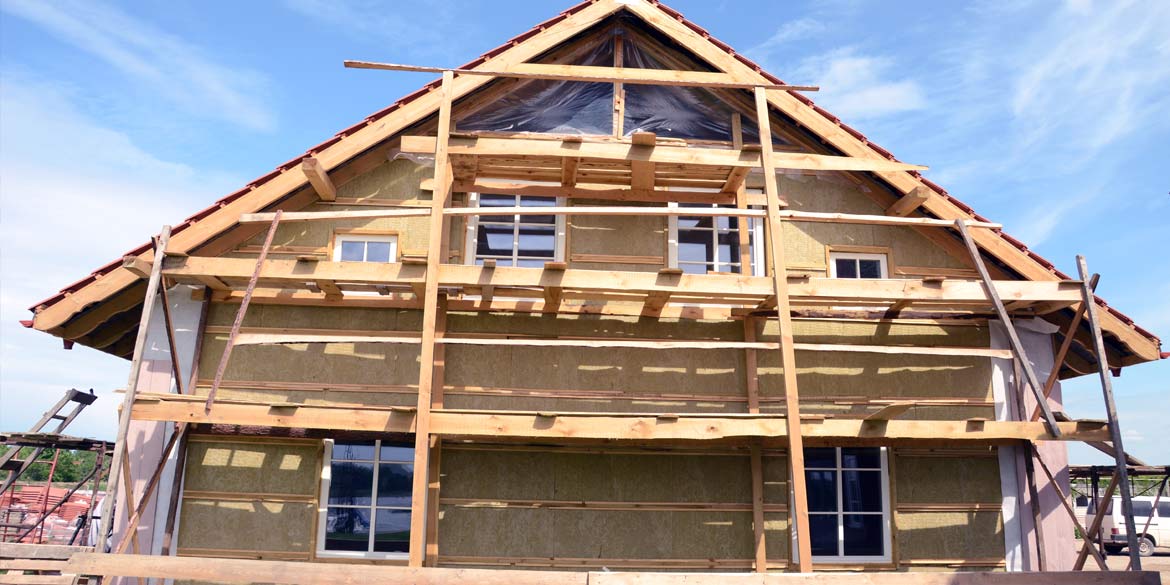
A non-standard construction house is made of materials that do not meet the concept of standard.’ The walls of standard houses are composed of brick or stone, while the roof is made of slate or tile. As a result, everything that isn’t conventional is considered a non-standard structure. Houses that aren’t standard are usually found in places where the resources required to create them are more easily available.
Timber-framed houses, log-style cottages, and prefabricated concrete houses are examples of non-standard housing. In the UK, there are now roughly one and a half million concrete prefabricated dwellings, the majority of which were constructed as a temporary solution to give inexpensive shelter to individuals who lost their homes during the Blitz.
As concrete walls age, fractures form as the steel binding rods that hold them together with rust begin to disintegrate. Though it’s impossible to predict how soon this will happen, the material’s recognized vulnerability makes it tougher for an insurer to assess the danger a house may face, making it difficult to get contemporary build home insurance.
Many individuals are increasingly aware of the challenges connected with home ownership, demand for various sorts of non-standard contemporary built homes may be limited. As a result, the difficulties that come with keeping a wooden or concrete-built home might deter both purchasers and mortgage lenders, as it is impossible to establish if the property has been well cared for in the past.
When seeking to acquire a non-standard construction property, you may have issues not only in acquiring buildings insurance but also in arranging to finance. Non-standard homes are generally viewed with the same suspicion by mortgage lenders as they are by insurance companies. There are several reasons for this, the most important of which is demand.
What Is A Non-Standard Property
Materials that do not meet the ‘standard’ definition are used in a non-standard construction (brick or stone walls with a roof made of slate or tile). Anything that does not fit this description is referred to as a non-standard construction. The construction materials for non-standard dwellings are frequently located in common geographical locations where they are (or have always been) more readily available.
Steel frame houses are known for their simplicity of construction, low weight, and affordability. Steel frame structures, on the other hand, can be difficult and expensive to insure, as they can be quite expensive to fix if something goes wrong. They’re not, especially flame resistant, which means that if there’s a fire, the heat can deform the steel beams.
From 1946 onwards, the British Iron and Steel Federation developed steel-framed dwellings. Insuring them might be difficult due to a variety of circumstances. Corrugated asbestos, cement, or steel roofing sheets were used to construct practically all BISF homes. These sheets have deteriorated over time, with the majority displaying symptoms of erosion.
Because concrete is the most prevalent material used in their construction, concrete dwellings frequently fall under the category of prefabricated buildings. Some houses, however, are built using concrete blocks rather than prefabricated slabs. Concrete walls can begin to disintegrate as they age, and cracks may appear when the steel binding rods that keep the walls together begin to corrode, making them a new sort of danger.